Thursday, February 12, 2015

The Baby and The Bathwater

In late January Johann Hari wrote a piece on The Huffington Post titled The Likely Cause of Addiction Has Been Discovered and It Is Not What  You Think.  Almost immediately several friends contacted me to see what I thought about it. Not a great deal, in short.  I fumed and fussed a bit, but didn’t write about it until I saw this essay by a friend of mine, David Cooke. Go here both to read David’s essay and to learn about his good work through 100 Pedals.  While you’re at it check out his podcasts.  I’m proud to say I was a guest of his recently.  http://www.100pedals.com/on-environment-connectedness-and-addiction/
Dave’s writing moved me to learn about Mr. Hari’s work and to respond to Dave.  There is a fair amount of reading involved here.  The original Hari piece.  Some well thought out responses by Dave and Peg O’Connor, plus my response to Dave below.  I think it’s worth your time as we continue to sort out what substance use disorder is, how it should be treated, and its impact on individuals and their families. 

 My response:

I am responding to Dave Cooke, a man I admire and consider a friend.  We’ve shared similar, if not congruent, journeys with our sons.  I write here to Dave, but also to others who have read any or all of the essays and articles mentioned.  I am NOT; repeat NOT attempting to start an argument with Dave here. 
If I understand Dave correctly, or Peg O’Connor, or Dr. Drew, their message in response to the Hari essay is “Don’t throw out the baby with the bathwater.” Hari makes useful and valid points.  Unfortunately the title of his piece is ill conceived.  By stating that  “The Likely Cause of Addiction Has Been Discovered…” he both oversimplifies and misleads.  
As a father who has lost a son to heroin addiction, I can vouch from personal experience to the complexity of the disease.  No sooner had Hari’s article appeared in The Huffington Post than I had friends asking for my opinion of what Hari had to say.  In turn, I corresponded with more friends and family about the article.  One, Barry Walsh wrote the following, which I thinks explains nicely how Hari oversimplifies.  Barry wrote me:  Anything as complex as addiction is multi variate. People like simple solutions - especially the press because it's always move on to the next story... Some people have brains that are especially vulnerable to addiction and then there are all the psychological and environmental contributors. As a therapist for 40 years I've found people are more complex than rats ... Thank god...”
The key to what Barry is saying, as do Dave and Peg O’Connor is that addiction is multi variate.  Neither the cause nor the treatment for each and every individual is as simple or easy as we might like to make them.  My son has been dead for over two years and our family still wrestles with identifying the various causes and actions that led to his overdose death.  We’ll never know it all, but our attempt to gain clarity might help others.  We do know there are things he could have done differently and things he had no control over.  The same goes for his parents and those who treated him along the way.  We might gain easy satisfaction in assigning blame.  We do better to find out what we can learn from a personal tragedy, a tragedy becoming all the more common in other households in this country.   
Unfortunately the bathwater with Mr. Hari’s baby is murky.  He makes it difficult to spot the baby and hang on to it.  What do I mean?  He is a sloppy journalist.  An easy trip to Wikipedia yields this:  Johann Eduard Hari (born 21 January 1979) is a British writer and journalist who wrote columns for The Independent (London) and The Huffington Post and made contributions to other publications. In 2011, he was suspended from The Independent after charges of plagiarism. He was also accused of making improper edits to several of his critics' Wikipedia pages under a pseudonym. [2][3] The news led to his returning his 2008 Orwell Prize[4] and later was a contributing factor in his leaving The Independent.”  We all make mistakes, and Mr. Hari has worked hard publicly at atoning for his.  He says as much on the website for his new book Chasing The Scream: The First And Last Days of the War on Drugs.  In particular he and his publisher go to great lengths to document all his sources properly.
That said, I believe he is making some new mistakes.  The Rat Park experiments were conducted and published in the late 1970’s.  To suggest “the likely cause of addition has been discovered” leads readers to perhaps believe that the discovery is fresh, not work done 35 or more years ago. The Wikipedia entry for Rat Park includes the following:  “The two major science journals, Science and Nature, rejected Alexander, Coambs, and Hadaway's first paper, which appeared instead in Psychopharmacology, a respectable but much smaller journal in 1978. The paper's publication initially attracted no response. [4] Within a few years, Simon Fraser University withdrew Rat Park's funding.”  To extrapolate from work done with rats decades ago to the likely cause of addiction is a leap of gigantic proportion.
Mr. Hari sidesteps mainstream science.  Or current science.  On his own website www.chasingthescream.com he refers to Bruce Alexander and Gabor Mate, both of whom he cites in his article, as “dissident scientists.”  Nora Volkow, the current head of the National Institute on Drug Abuse (NIDA) rejected his request for an interview.  I’d like to know more about that story.  I think it is safe to say that NIDA’s research over the span of time since the Rat Park experiments is exponentially wider and more sophisticated than the evidence Hari marshals to support his claim. There are many places to hear Nora Volkow speak on addiction science.  She recently spoke before the U.S. Senate Forum on Addiction and Collateral Damage.  Go here: https://www.youtube.com/watch?v=M2uNoeB7AsA
Hari does attempt to incorporate NIDA into his argument by consulting Robert DuPont, the first director of NIDA.  DuPont is a medical doctor, a psychiatrist.  He served from at NIDA from 1972 to 1978 and was also the second White House Drug Czar from 1973 to 1977 under former Presidents Richard Nixon and Gerald Ford.  It was President Nixon who launched the War on Drugs, shortly before DuPont became Drug Czar.  It is also worth noting that much of the brain imaging capability now being used to help understand addiction either did not exist or was in its infancy during DuPont’s tenure. I have no idea how conversant Dr. DuPont is with current NIDA research or how wedded he may be to the prevailing ideas of his time.  It would be helpful to have some clarity in this regard.    
On his book’s website Mr. Hari states:  “I would be very happy to include the response of the current head of NIDA to these theories, alongside those of the previous head that are described here. I am keen to offer the fullest possible response, and to explore all sides of this really important debate about what causes addiction.”  I submit that the greatest failing of his article, and indeed his book, is that he has failed in his exploration or, at the least, jumped too quickly to a conclusion.  If we throw out the bathwater, we might want to give this baby a clean rinse. 


Tuesday, January 27, 2015

The Kingfisher Project

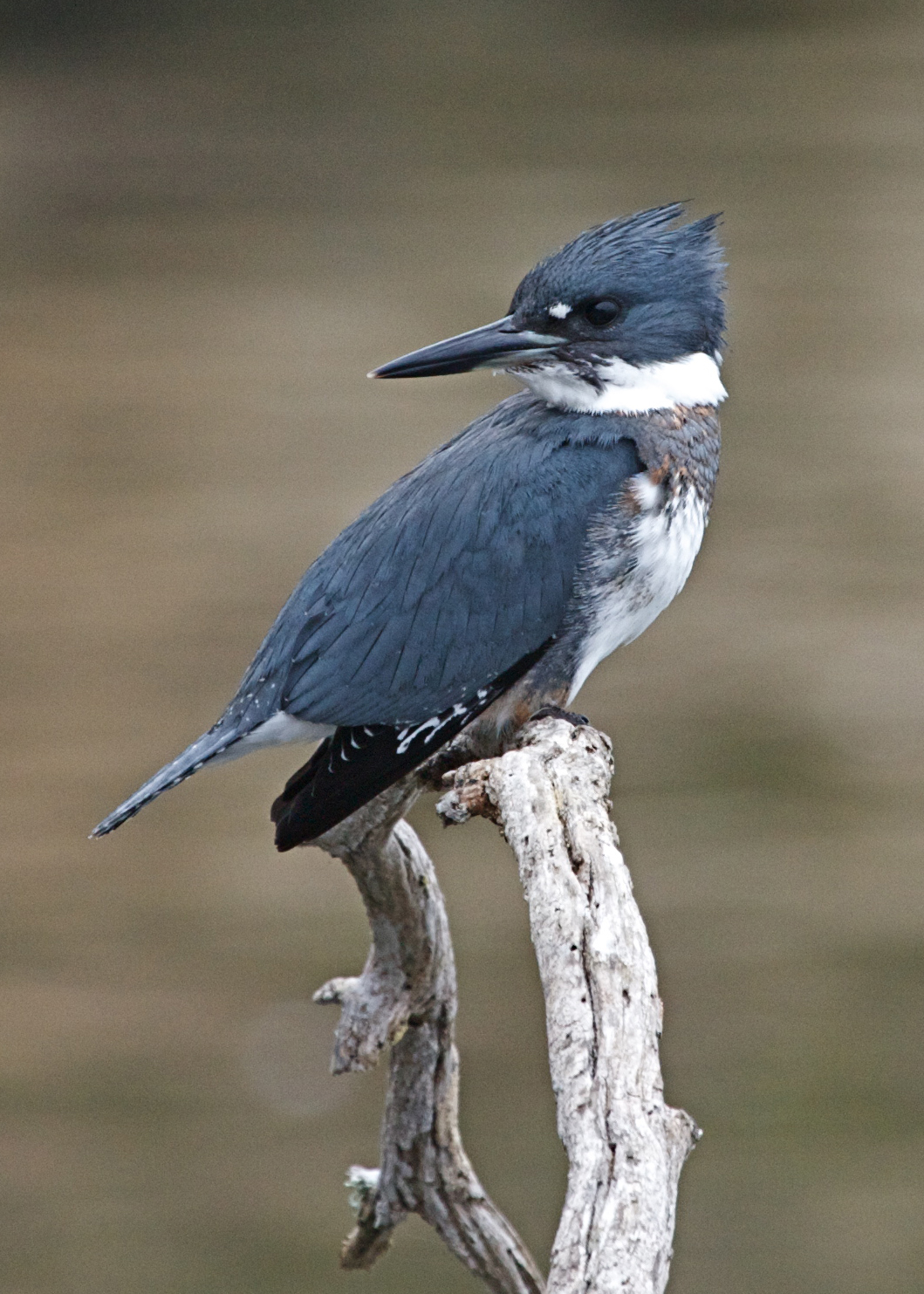
The Kingfisher Project is a community information and radio project based at public radio station, WJFF, Jeffersonville, NY, 90.5 fm.  The project was established in 2014 to honor the life of a young woman, Rebecca Pisall, 20, who was shot and killed on June 20, 2014, due to her addiction to heroin.  For more on The Kingfisher Project, go here:

Radio segments produced for the Kingfisher Project are part of the Making Waves public affairs program which airs 8 to 9 p.m. Mondays on WJFF. I was honored to be a part of the January 26th program, which included my presentation to the U.S. Senate Forum on Addiction and Collateral Consequences. 

The January 26th segment was titled “The Stigma Is Deadly.” It is a half hour long. To hear the episode, to support WJFF, and most important, to help launch the fledgling Kingfisher Project, listen to the episode here:


Thanks.  We WILL prevail.

Bill


Thursday, December 11, 2014

SantaCon Redux

I first posted this on my blog a year ago. William’s memorial service was December 15th, 2012.  An update seems appropriate.    

“As we emerged from William’s memorial service in Midtown Manhattan exactly a year ago, Saturday, December 15th, we were embraced by a swarm of drunken Santas. The irony of leaving the memorial for someone who died due to a substance use disorder, only to encounter the obscenity of a mob of drunken Santas, reindeer, and elves was not lost on us.  SantaCon was in full swing. 
Fortunately the New York Times has spared me having to reflect on this event.  I’m happy to say that Lee Seinfeld, the owner of my local watering hole, wants nothing to do with the event.” 

Here is an op-ed piece that captures my feelings nicely.  http://nyti.ms/1ftAsCr  Thank you Jason Gilbert.    

You can also go here to find Times reportage on the event:

Or, for that matter, try the LA Times:


This year, add this piece by Meredith Hoffman in The Village Voice:


Wednesday, October 8, 2014

The Fox Watching the Chickens

On July 9th the office of New York Attorney General Eric T. Schneiderman make the following announcement:

NEW YORK – After an investigation uncovered widespread violations of mental health parity laws by the company, Attorney General Eric T. Schneiderman today announced a settlement with New York City-based EmblemHealth, Inc., requiring the health insurer to reform its behavioral health claims review process, cover residential treatment and charge the lower, primary care co-payment for outpatient visits to mental health and substance abuse treatment providers. The settlement also requires the health insurance plan -- which has 3.4 million members in its HIP and GHI divisions -- to submit previously denied mental health and substance abuse treatment claims for independent review. That review could result in more than $31 million being returned to members wrongfully denied benefits.

An investigation by the Attorney General’s Health Care Bureau found that since at least 2011, EmblemHealth, through its behavioral health subcontractor, Value Options (My bold.), issued 64% more denials of coverage in behavioral health cases than in medical cases. The agreement with EmblemHealth is the third reached by the Attorney General’s office so far this year enforcing the mental health parity laws and stems from a broader and ongoing investigation into health insurance companies’ compliance with the laws.

For the full text of the Attorney General’s announcement – go here:

Today I wanted to learn more about Value Options.  Those that know me understand I have more than a casual interest in their performance and behavior.  The first thing I saw on their website, at the very top of the screen was an announcement about S.O.S. – Stamp Out Stigma. See for yourself here: http://stampoutstigma.com 

PLEASE correct me if you think I’m wrong.  Value Options, which has clearly demonstrated prejudice against mental health and substance use disorder claims, is now trying to pretend that it wants to end the stigma against mental health and substance use disorder, even as its actions serve to reinforce and perpetuate that stigma by denying proper claims.  The fox is watching the chickens. At the least, Value Options, should say nothing until their practice matches their “policy.”  Until then they come across as the cynical and deceitful business I believe them to be.   


Saturday, September 27, 2014

Josephine's Visit

The end of summer was sweetened by a visit from my six-month-old granddaughter, Josephine.  We’d not seen each other since Memorial Day weekend, when we were together at our Catskills home.  Josephine took her first ride on my garden tractor then, as we rode down to our lower meadow to plant a weeping willow in memory of her uncle, William. 
This recent visit was filled with firsts.  There was, of course, Josephine’s development in the interim to marvel at.  She was rolling over, sitting up, and chewing on anything and everything available to her, with an uncanny and particular fondness for all those white tags that either give washing instructions or threaten to bring the law down upon you if you remove them. Josephine’s genius for locating and deriving pleasure from those tags is unparalleled – certainly in this adoring grandfather’s eyes. 
The firsts included lots of “swimming”.  Time spent in the water:  standing while being held, or sitting in her Crab, a floating device she can sit in with holes in the bottom which allow her to kick her legs to her little heart’s content.  And kick she did.  “Kick, kick, kick”, became a refrain from parents and grandparents alike.  Josephine’s firsts included saltwater (Long Island Sound and Great Peconic Bay) and freshwater (The Beaverkill River and a nearby pond).  She and the Crab were already veterans when it came to swimming pools. Josephine is a water baby.  From her bath or shower to the cold of the river, she delights in all the sensation water has to offer.  
There were food firsts, “solids” to taste and smear:  sweet potato, pear, carrots from grandfather’s garden (happily prepared by grandfather himself).  Then firsts from nature.  She saw her first black bear and her first bald eagle, both at relatively close range.  Things adults forget to take in:  bare feet in wet grass, the captivating magic of a breeze moving leaves in the trees back and forth, the mystery of one’s feet disappearing in sand as gentle waves wash up and fall back at water’s edge. 
The permanence of things had become an issue of some concern to Josephine.  Properly so in terms of her development.  She delighted in peek-a-boo games.  Wondered what happened to a dropped toy.  More to the point was growing apprehension over the disappearance or absence of her mother.  We adults consulted Selma Freiberg’s The Magic Years or other resources on separation anxiety.  Josephine would fret or cry whenever her mother’s disappearance compelled her.  There were times when all the snuggling, hugging and kissing by her grandfather simply wouldn’t suffice. 
On our last day in the country Grandfather’s company was sufficient, however.  At least for a spell, while the rest of the adults packed for returns to New York City and Chicago respectively.  Josephine and I took a walk outside, around the house.  There was a slight breeze, just enough to move the trees and flowers and make the fine hair that gives Josephine the appearance of having a Mohawk stand up just a bit. 
I held her while we circled the house together.  We smelled the sweet clethra and the spiky cleome.  We crunched the thyme, some of it still purple, on our rock steps. We stopped by the coreopsis, looked at butterflies in the bee balm, made sure the deer hadn’t eaten Black-eyed-Susan’s or daisies or silver mound.  We put our feet in the damp grass and looked at William’s willow.  The goldenrod swayed as we came back to the front of the house and plucked a small yellow flower from the potentilla to put in Josephine’s hair.  Balance on her head is what we settled for, just long enough to share with her Mommy and GranMarg. 
A day later we were at JFK, Mommy Elizabeth strapping a baby carrier in front of her, being helped into a backpack, grabbing a purse and a suitcase.  I held Josephine, the last addition to Elizabeth’s load to carry into the terminal, while tears streamed down below my sunglasses.  For two weeks I’d done my best to console Josephine when she felt abandoned or fearful.  Now it was my turn.  William is more than a willow.  He’s a dead son who heightens my apprehension about the rest of my family.  I told Josephine she had the best mommy in the world, told Elizabeth Josephine was the best baby in the world, handed off Josephine, hugged them both and cried as I watched them disappear into the terminal.  For Josephine separation anxiety may be a “stage” she passes through.  Who knows about grandfather?       


Josephine with her Dad Johnny Anderes.  Beaverkill Falls 8/31/14. Where she saw her first bald eagle. 


Sunday, July 13, 2014

Birthday Trout

I got to celebrate my birthday at our home in the Catskills, near the headwaters of the Beaverkill River.  I like to say it is as close to heaven as I’ll probably get.  July 12th’s day near heaven included helping my good friend Rudi Stahl cut up and remove a storm damaged tree, putting mulch on blueberry bushes before fencing them in to help keep foraging creatures away, harvesting a banner onion crop from the garden, and turning over the beds in preparation for planting late season lettuce and spinach.
Later in the day Margot invited all the Stahls to join us for an early evening drink on our porch.  Nancy and Frederica drove over and joined us just as the Netherlands was finishing off Brazil in the World Cup consolation game.  Rudi was on his way, having decided to take a hike on the trail that passes by both the Stahl’s house and ours. 
Rudi arrived with a story to tell (always a good sign yet another gathering will be enjoyable).  He began with a wildlife report.  On his way over he’d seen two deer, one turkey, one bear,  and...could we guess…a trout!  The deer and the turkey were unremarkable.  The bear, one of several making more frequent appearances in the neighborhood, immediately invited discussion of other bear sightings, bear shooshing technique (including a stand up demonstration by Nancy), and the reminder that the ripening blueberries at both homes will ensure more bear sightings, fencing or no. 
Then to the trout.  Our homes sit on wooded hillside, pocketed with meadows, that slopes down to the Beaverkill.  There are any number of rivulets, rills and little creeks that all lead down to the river.  Some are natural, others man made drainage to help keep trails from washing out.  Many times they are dry and rock filled.  After a spring and summer of rain, sometimes heavy storms, they trickle and sing on their way downhill – feeding the Beaverkill and quickly turning it from a mountain stream to a river over the course of its 28 mile length.  A river famous for its trout fishing. 
The trout.  Rudi’s trout, he told us, was in a puddle, one couldn’t even call it a pool, in one of these tiny tributaries.  A brook trout, nearly a foot long, splashing about in just enough water to survive, easily a quarter of a mile uphill from the river.  Had it managed to somehow swim upstream (up rivulet) during flooding from one of our recent heavy thunderstorms?  Miraculous, if so.  Nonetheless, there was the trout undeniably stranded in its own tiny pool. 
Discussion on the trout’s fate ensued.  Left alone it would expire with the inevitable drying out of the pool. Unless, the thunderstorm that threatened our party on the porch and drove us inside briefly provided enough water for a partial stay of the fish’s demise.  Would a bear find it and make a quick meal?  Should we get it?  Fresh mountainside trout for my birthday dinner?  Brief speculation on how to best dispatch the fish once scooped from its modest confines in order to prepare it for dinner.  Somehow my position as birthday boy gave me some deferential authority in our decision making.  What did Bill want to do?    
None of us were really happy with human consumption as a resolution for the Brookie’s dilemma. Had he been properly fished out of the river, perhaps a different story.  Scooped from a puddle?  It didn’t seem right.  Finally, it was agreed.  We filled a 5-gallon bucket with water and the party followed Rudi down the trail to the spot where there was, undeniably and improbably, a trout.  Finding the fish seemed about as likely as sighting a troll underneath the bridge just below us on the trail. We’ve always called it The Troll Bridge.  But our party was prepared this time for trout, not trolls.  We warmed to the task.  Rudi set a large rock to dam one end of the puddle and bar a damaging escape attempt.  He tried an Austrian one-hand grab, but this trout was far too wily for that technique. A second bucket was deployed.  Dip and scoop yielded no better than Austrian hand grab.  Finally Rudi set the bucket at one end of the pool.  The trout headed toward the other end. Fredrica reported on the trout’s whereabouts.  With an inattentive moment the fish headed to the other end of its tiny enclave, Rica gave the signal, Rudi scooped, and suddenly there was much flopping, cheering, and a trout newly arrived in a fresh bucket of water. 
An excited collection of fisher-people trooped back to the house and to our cars.  The trout took what one might presume was its one and only car ride.  Our two vehicle caravan drove down to the river.  We parked and went to the water’s edge.  As Birthday Boy, I had the honor of spilling the lucky trout back into the river.  A tip of the bucket and the brook trout was in its proper element, slicing upstream with reassuring speed that let us know it was happy and healthy, unaware of our celebratory clapping.

Neither the Brookie nor I know what the next year will bring.  I doubt the fish has thought about it very much.  I, not much more.  But for each of us, the first day was glorious.  I stood next to Nancy as we lingered at river’s edge, looking upstream.  It is a beautiful spot.  Early evening, the water shimmering as it cascades over rocks, providing proper hiding pools for a fish and reminding me that indeed, our home in the Beaverkill Valley may well be as close to heaven as I’ll ever get. If I do get closer, it’s hard to imagine it being any better.